
Industrial Coupling Roadmap of Tianfu Company under GPC
Since late November, a document detailing the raw material requirements for the Guizhou Wengfu Jiangshan New Materials and Electronic Chemicals Project has been lying on the desk of Luo Ziming, Chief Engineer of Guizhou Tianfu Chemical Co., Ltd., located in the Machangping Industrial Park, Fuquan City, Qiannan Prefecture. The document has been perused and annotated repeatedly.
"Going forward, the Guizhou Wengfu Jiangshan Glyphosate Project will require approximately 50,000 tons of glycine, 50,000 tons of paraformaldehyde and other organic raw materials annually. Currently, these raw materials are mainly supplied from outside the province. The long transportation routes translate into high logistics costs and supply chain risks," said Luo Ziming. As an enterprise in southwest China equipped with coal-based methanol and synthetic ammonia production capacity, Tianfu Chemical enjoys distinct advantages in raw material supply and regional location for extending its production chain downstream to manufacture these organic chemicals.

Photo of the plant area of Guizhou Tianfu Chemical Co., Ltd. Provided by GPC
Transforming from a mere "ammonia supplier" to an "organic fine chemical supporting expert" that forges regional competitive industries, this strategic transition blueprint of Tianfu Chemical, a subsidiary of GPC, highlights the unique role of traditional coal chemical enterprises in Guizhou's industrial landscape: with "industrial coupling" as the core philosophy, it deeply integrates itself into the province's pillar sectors such as phosphorus, new energy and fluorine industries, thus blazing a distinctive path of industrial symbiosis and value co-creation.
"Tianfu owes its existence to the phosphorus chemical industry," noted Luo Ziming. Since its establishment in 2005, the company has built its core competitiveness on a robust "coal-ammonia-phosphorus" industrial chain—utilizing Guizhou's coal resources to produce synthetic ammonia, which is then directly transported via pipelines to support phosphate fertilizer production.
Nevertheless, confining itself to the role of a bulk raw material supplier meant being trapped at the low end of the value chain and exposed to severe market fluctuations. Tianfu Chemical has thus reassessed its resource endowments to carve out a clear positioning amid the evolving industrial trends.
Coal chemical industry development in Guizhou kicked off in the early 2000s, almost in parallel with other regions across China. Leveraging local coal resources, the province has built a foundational industrial system dominated by synthetic ammonia, methanol, ethylene glycol and coking.
"However, compared with major coal-producing provinces like Shaanxi and Xinjiang, Guizhou's coal resource endowment has certain limitations," Luo Ziming pointed out. The reserves of high-quality raw coal suitable for large-scale modern coal chemical projects such as coal-to-olefins are relatively scarce, which has restricted the construction of ultra-large production facilities to a certain extent. This disadvantage put Guizhou at a competitive edge in terms of industrial scale and development sustainability amid the subsequent nationwide construction boom in the sector.
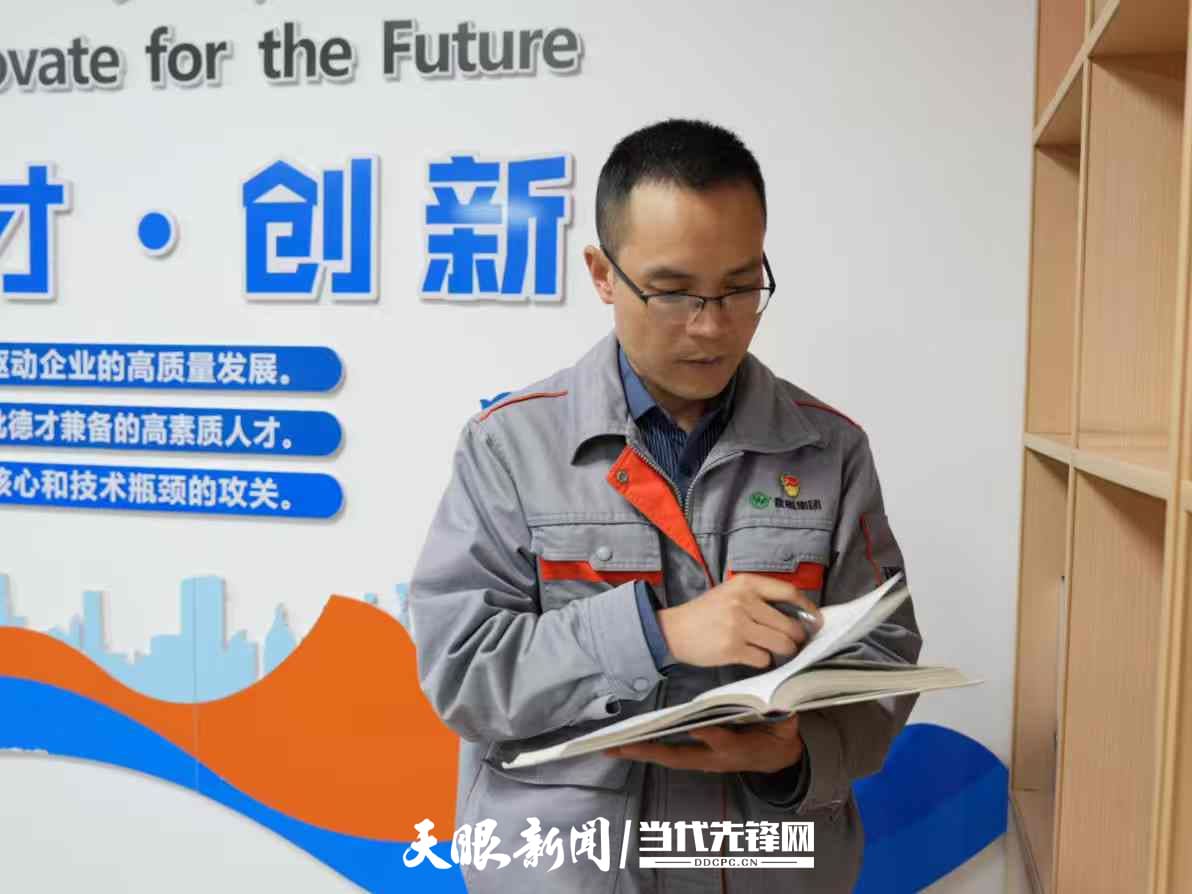
Photo of Luo Ziming, Chief Engineer of Guizhou Tianfu Chemical Co., Ltd. Provided by the company
Ironically, such constraints have forced Tianfu Chemical to pursue a differentiated and characteristic development path. As an insider in the industry, Luo Ziming has formed his own insights: instead of blindly pursuing scale expansion, Guizhou's coal chemical industry should fully capitalize on its coupling advantages and embrace a development strategy focused on "refinement, specialization and innovation".
The first dimension of coupling lies in the transformation from an "energy-intensive enterprise" to a "regional energy circular scheduling hub". Coal chemical production generates massive amounts of high, medium and low-grade heat energy. Previously, low-grade heat was largely underutilized, but now it has emerged as a valuable resource for industrial coupling.
In accordance with GPC's industrial layout, Tianfu Chemical has constructed an extensive pipeline network, building a "thermal energy neural network" covering the entire industrial park, which precisely delivers surplus steam to other energy-consuming enterprises in Machangping Industrial Park. This initiative not only provides the necessary heat source for downstream production but also elevates Tianfu's energy efficiency to the industry-leading level—its comprehensive energy consumption per ton of ammonia has dropped by 20% over the past five years, marking a successful transformation from an "energy consumer" to an "energy saver" and further to an "energy enabler".

Photo of the plant area of Guizhou Tianfu Chemical Co., Ltd. Provided by the company
The depth of coupling is further reflected in its precise response and forward-looking integration with specific industrial partners. In the Fuquan-Weng'an 100-billion-yuan phosphorus chemical industrial park, Tianfu Chemical supplies liquid ammonia and aqueous ammonia to partner enterprises including Kingenta, Batian and Yuneng through short-distance transportation. This has significantly strengthened the raw material supply capacity of manufacturers in the region, creating an irreplicable advantage of regional collaborative development.
The supporting planning for the Wengfu Jiangshan Project signifies that industrial coupling has entered the "deep-water zone" of value chain restructuring. "This is more than just a business transaction," Luo Ziming emphasized. "It is about strengthening the weak link in Guizhou's pesticide industrial chain and enhancing the resilience and competitiveness of the entire industrial ecosystem through localized production."
Coupling-driven transformation requires solid technological capabilities. Tianfu's formamide products have gained recognition from major domestic pharmaceutical enterprises and established long-term stable cooperative relationships with several companies in Northeast China. Through technological breakthroughs, the company has successfully converted sodium formate hazardous waste containing methanol into industrial-grade sodium formate products, achieving zero discharge of solid and liquid wastes. These successful cases have demonstrated Tianfu Chemical's strong R&D capabilities in the field of fine chemicals.
The development direction has become crystal clear. "Guizhou's modern phosphorus chemical industry, new energy battery material sector and emerging fluorine chemical industry are all influential sectors nationwide and even globally," stated Luo Ziming. "The coal chemical industry must proactively identify the demand gaps in these sectors, develop specialized, high-value-added chemicals and intermediates to provide supporting services, and thus establish a stable 'internal circulation' market."
This year, on the basis of maintaining a stable annual output of 500,000 tons of ammonia-alcohol, Tianfu Chemical strives to achieve an industrial output value of 2.6 billion yuan. Centering on the refined demand of downstream industries such as phosphorus, fluorine and new energy, the company will continue to optimize its product structure and extend the value chain, translating its industrial coupling strategic blueprint into tangible competitiveness and new growth drivers.


