
The Field Classroom of Guizhou Phosphate Chemical Group Prescribes "Nutrition Plans" for Crops
In Jiuquan, Gansu Province early in the morning, cornfields are still glistening with dew. Uncle Liu, who has grown corn for half his life, froze on the ridge as soon as he stepped onto the field. On his left plot, corn stalks grow thick and dense, with layers of leaves forming a dark green "green curtain"; on the right, corn plants stand sparsely, letting wind pass through easily, with much paler leaves. Passers-by couldn’t help pausing———how could there be such a huge difference under the same weather and with the same seed variety?
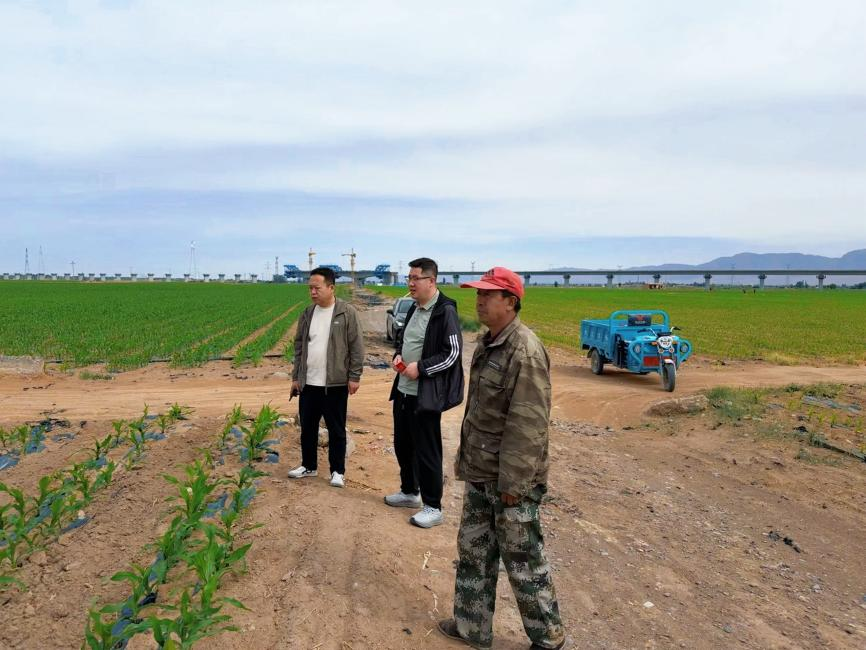
"It’s not luck. We just chose the right fertilizer for the soil!" Uncle Liu smiled and patted the test sign beside the ridge. Before spring sowing, the agrochemical service team of Gansu Wengfu Company under Guizhou Phosphate Chemical Group (hereinafter referred to as GPC) came to the Jiuquan base to communicate with local dealers and farmers about the experimental demonstration field of the new fertilizer "Cohesion Diammonium Phosphate".
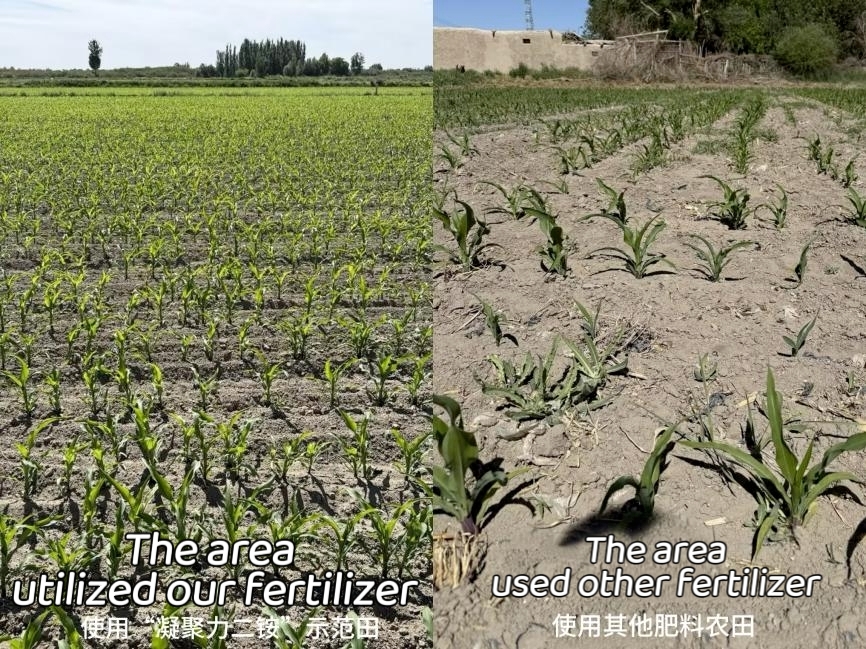
Uncle Liu, a long-time user of the "Hongfu" brand fertilizer series, volunteered to host the demonstration field on his land. Two adjacent plots with nearly identical soil texture and moisture were selected. Sowing and fertilization followed the same timing, density and irrigation schedule, with only one variable: the new "Cohesion Diammonium Phosphate" was applied on the left, while common fertilizer was used on the right. This is a standard agricultural trial method————only by keeping other conditions consistent can the fertilizer effect be truly reflected, rather than creating an illusion by choosing better land.
Technicians explained to onlooking farmers: "Many folks think the denser the seedlings, the better. In fact, if roots are weak and stalks thin, overcrowding only causes competition for nutrients, resulting in lush leaves but no corn cobs. Phosphorus fertilizer acts like building a 'skeleton' for corn. Only with a strong skeleton and deep roots can seedlings grow more uniformly and tiller more under the same sowing rate. That kind of density truly lays the foundation for higher yields."
Upon closer inspection, corn treated with "Cohesion Diammonium Phosphate" had roots penetrating three soil layers, with stalks so firm they could hardly be pinched by fingers, naturally supporting thick and robust stems and leaves.
In recent days, the agrochemical service team has visited farmers one by one along the ridges. In field classrooms, they compared the root systems of two clusters of corn seedlings and explained the fertilization principle: "Promote root growth in the early stage and strengthen stalks in the middle stage."
"With a solid skeleton, nutrients absorbed early can be converted into yield later. Otherwise, crops only grow tall without bearing ears, which is all in vain." Sister Wang, who has long farmed by traditional experience, nodded repeatedly. "I used to fertilize blindly. Now I realize farmland is just like people—it needs balanced nutrition to 'eat well'."
From a single corn seedling on the ridge to grain on millions of dinner tables, every inch of growth reflects GPC’s commitment to safeguarding food security. Standardized demonstration in trial fields and patient guidance in agrochemical services all serve to implement the strategy of "storing grain in land and technology". With reliable fertilizer quality and solid technical services, the group helps farmers increase harvests and grow better grain, firmly securing the food bowls of hundreds of millions of Chinese people.
Wind rustles through dense corn leaves, as green stalks grow vigorously upward, just like the hope on this land, with proper fertilizer and advanced technology, the foundation of China’s granary is taking deeper root and growing stronger through such diligent cultivation.


