
Synthetic Biology, AI Formulation, Digital Intelligence: The Technical Signals at This New Fertilizer Conference Go Beyond Fertilizers
On October 17, the 28th National Technical Exchange Conference on New Fertilizers (2026) & Annual Meeting of the Chemical Fertilizer Professional Committee of the Chemical Industry and Engineering Society of China kicked off in Guiyang. Co-hosted by the Chemical Fertilizer Professional Committee of the Chemical Industry and Engineering Society of China, Guizhou Phosphate Chemical Group (GPC), the State Key Laboratory for Green and Efficient Development and Utilization of Phosphate Ore and Its Associated Resources, and the Guizhou Chemical and Chemical Engineering Society, the conference adopted the theme “Empowerment by Digital Intelligence, Synthetic Biology, and Collaborative Innovation Pathways for Chemical Fertilizers”. Nearly 200 industry experts, entrepreneurs and delegates attended the event.
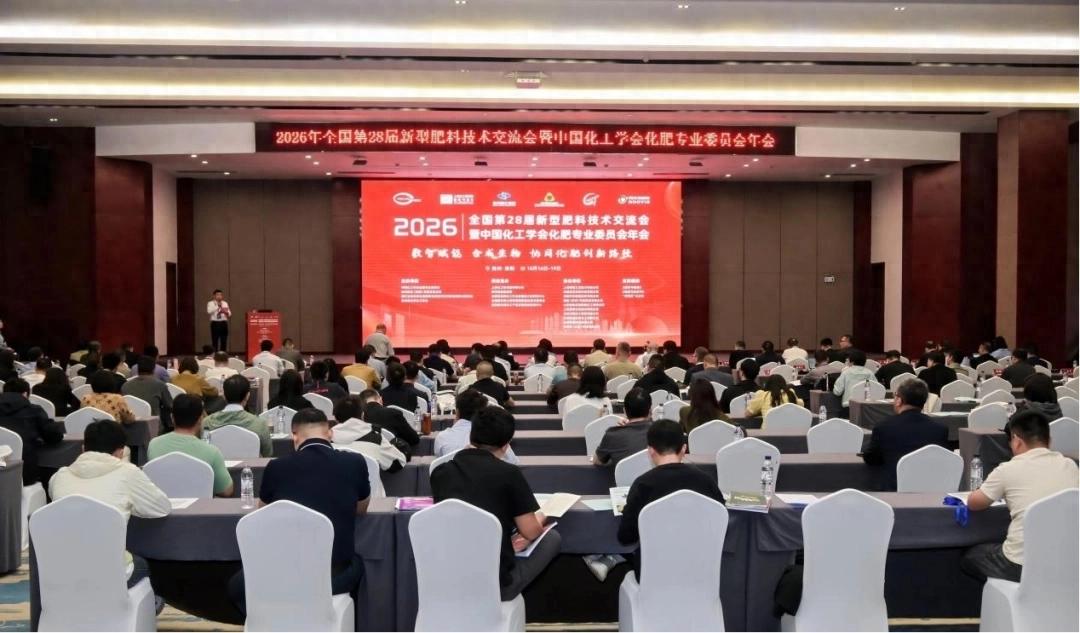
Judging merely by the title “new fertilizers”, it may appear to be a routine technical exchange focused on product upgrading. A close look at the agenda, however, highlights three noteworthy technical keywords.
The first keyword is synthetic biology. The development trend of synthetic biology in agrochemicals stood as a key session topic, alongside presentations by researcher Shi Yuanliang from the Institute of Applied Ecology, Chinese Academy of Sciences on the status and outlook of new fertilizers, and chief expert Gao Xiangzhao from the National Agricultural Technology Extension and Service Center on agricultural progress and fertilizer opportunities. Synthetic biology entering the agrochemical agenda is not merely about adjusting nutrient forms in conventional fertilizers. Instead, it points to upstream areas such as biostimulants, microbial metabolites and bio-based materials. For phosphate chemical enterprises with phosphate ore and associated fluorine, silicon and calcium resources, how to convert these resources into higher-value products via biotransformation remains an unfolding research frontier.
The second keyword is AI formulation. A dedicated session explored the prospects of artificial intelligence in new raw material screening and fertilizer formulation design, paired with experience-sharing on digital and intelligent upgrading of fertilizer production lines. The industry’s focus on digitalization is shifting from production-side automation and unmanned inspection toward R&D-side raw material screening and formulation design. Fertilizer formulation has long relied on field trials and empirical know-how. With AI adoption, formulation iteration cycles and trial-and-error costs may be fundamentally reshaped. This aligns with GPC’s ongoing practices in smart factories and digital twins.
The third keyword is the 15th Five-Year Plan. Xiu Xuefeng, President of the China Phosphate and Compound Fertilizer Industry Association, delivered a keynote speech outlining development ideas for the phosphate and compound fertilizer sector during the 15th Five-Year Plan period. Discussions at this five-year planning milestone cover far more than output and capacity targets; they address directional priorities including resource utilization efficiency, product portfolio optimization and technology roadmap selection. For ore-based phosphate enterprises, a core, unavoidable topic is how phosphate resources can be extended from bulk fertilizers toward fine phosphorus chemicals, new energy materials, and high-value utilization of associated resources in the 15th Five-Year Plan period.
Distinct as they are, the three keywords converge on one major trend: innovation in new fertilizers is evolving from simple formula tuning to fundamental technological restructuring. Synthetic biology reshapes raw material supply chains, AI transforms R&D workflows, and the five-year plan redefines resource allocation logic. Delegates also visited Guizhou Xiyang Industrial Co., Ltd. for on-site study, bridging conference discussions with industrial application. This extension from the meeting room to the factory floor demonstrates that the industry attaches equal importance to technical applicability and technical theory.


